
Gambling, Stress and Low Mood: Where to Find Help
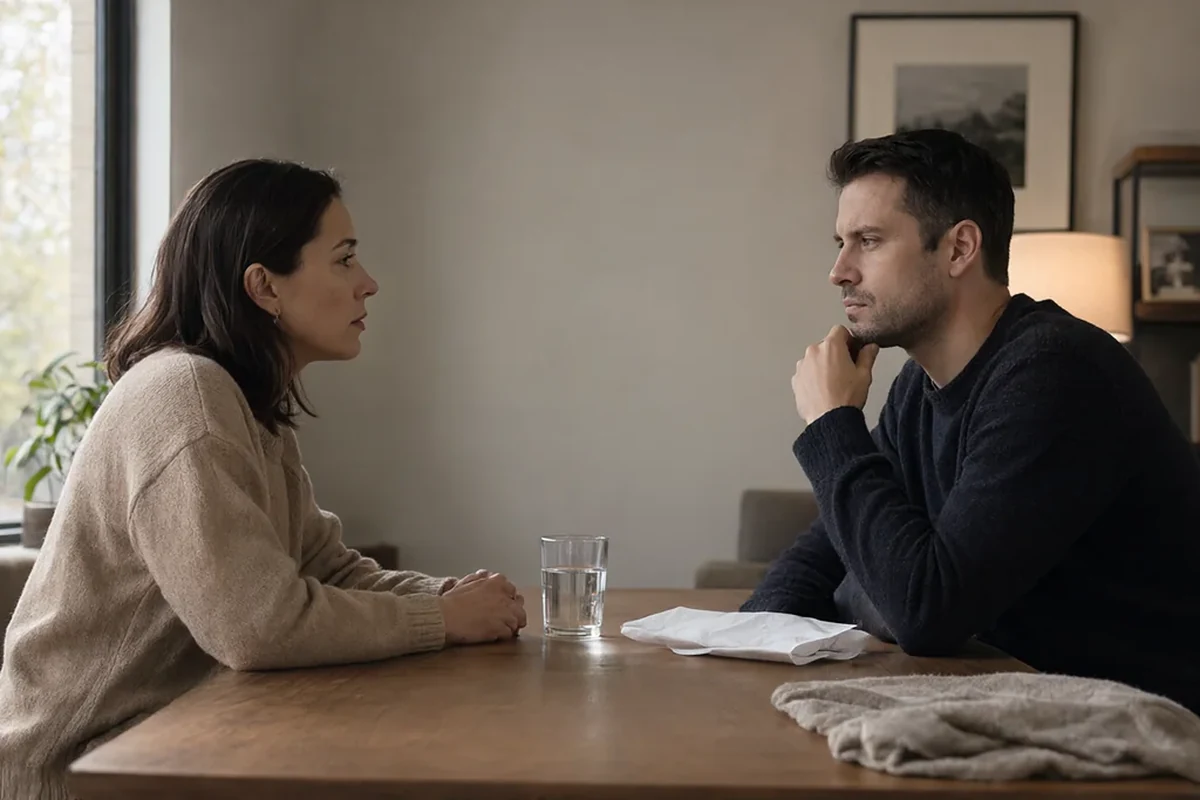
Gambling and mental health are connected in both directions. Stress, low mood and anxiety can push someone towards playing for relief, and heavy losses can deepen the very feelings that drove the play in the first place. Recognising the connection is not a judgement; it is useful information.
Help is available, free and confidential, and reaching for it early is far easier than reaching for it late. This article explains the connection and points towards the kind of support that actually helps.
The connection runs in both directions, which is what makes it so hard to break alone. A mood that leads to play is deepened by the outcome of play, and the deepened mood then increases the pull towards playing again, forming a loop that willpower by itself rarely manages to interrupt.
How the two interact
For some people gambling functions as an escape from difficult feelings, offering a period of intense distraction that temporarily crowds out stress or sadness. That relief is short, and the losses that follow often make the underlying feeling worse.
The cycle is therefore self-reinforcing. The mood that leads to play is deepened by the outcome of play, which increases the pull towards playing again. Breaking that cycle usually works better with support than with willpower alone.
Signs worth taking seriously
Some signs point towards the interaction of mood and play rather than to gambling on its own. Playing specifically to change how you feel, playing more when you are stressed or low, or feeling restless and irritable when you cannot play are all worth noticing.
None of these is a diagnosis, and none of them means something irreversible has happened. They do mean that a conversation with a professional, or with someone you trust, is likely to be more useful than another attempt to manage it alone.
Recognising the link is not the same as diagnosing yourself. It simply means that where mood is part of the picture, support that addresses both the play and the feeling underneath it tends to be more durable than support that addresses only one half of what is happening.
Where help comes from
Support for gambling harm is widely available and usually free. The exact services differ by country, but the categories below cover most of what exists, and any local service can point you towards the others.
- National gambling helplines, which are free and confidential.
- Counselling services that specialise in gambling harm.
- Self-help groups, in person and online, where people share experience.
- National self-exclusion schemes that block several sites at once.
- A GP or mental-health professional where mood is part of the picture.
Services are built for the moment someone decides to speak. Nothing a caller says is new to them, and the difficulty of the first sentence is anticipated rather than surprising, which is exactly why speaking turns out to be easier than it feels from the outside.
Talking about it
The hardest part is often the first sentence, and it is worth knowing that the difficulty is almost universal. Services are built around that moment and are used to hearing it; nothing a caller says is new to them or shocking.
If reaching out feels too large a step, a smaller one still helps: telling one trusted person, or putting a self-exclusion in place, is a real beginning rather than a token gesture. Support can be added afterwards, and it is easier to add once something has already moved.
A smaller step still counts for something real. Telling one trusted person, or putting a self-exclusion in place, is a genuine beginning rather than a token gesture, and it makes adding proper support afterwards very much easier than starting from nothing at all.
What helps and what does not
Different responses suit different moments, and knowing the difference helps you choose the right help rather than the nearest one.
The table below pairs common situations with the kind of support that fits them. Where a situation involves mood as well as play, help that addresses both is usually the stronger choice.
| Situation | What helps | Why |
|---|---|---|
| Play used to escape mood | Counselling or a GP | It addresses the reason, not just the play |
| Unable to stop alone | Helpline and a self-exclusion | Practical blocks plus human support |
| Financial strain | Debt advice alongside support | Removing the pressure reduces the pull |
| Feeling isolated | Self-help groups | Shared experience reduces shame |
| A single crisis | A helpline now | Immediate, confidential and free |
Reaching out is a step, not a verdict
Gambling and mental health influence each other, and both respond to support. Asking for help early is not a sign that things are severe; it is a sign that they are being handled before they become so.
Support is free, confidential and used by far more people than most imagine. Reaching for it is a practical step rather than an admission, and it is available whether the difficulty is about money, about mood or about both at once.
Read next
Setting Deposit, Loss and Time Limits Before You Play
A limit chosen calmly is worth more than a strategy chosen mid-session. How to work out an affordable loss figure and why the order of decisions matters.
Cooling-Off Periods and Long Blocks: Choosing a Tool
Short pauses and long-term blocks remove the choice from a future moment. How the options differ, and why neither is the same as closing your account.
Early Warning Signs That Gambling Has Stopped Being Fun
Harm usually builds through small changes that are easy to explain away. The signals worth noticing in your own play and in someone close to you.